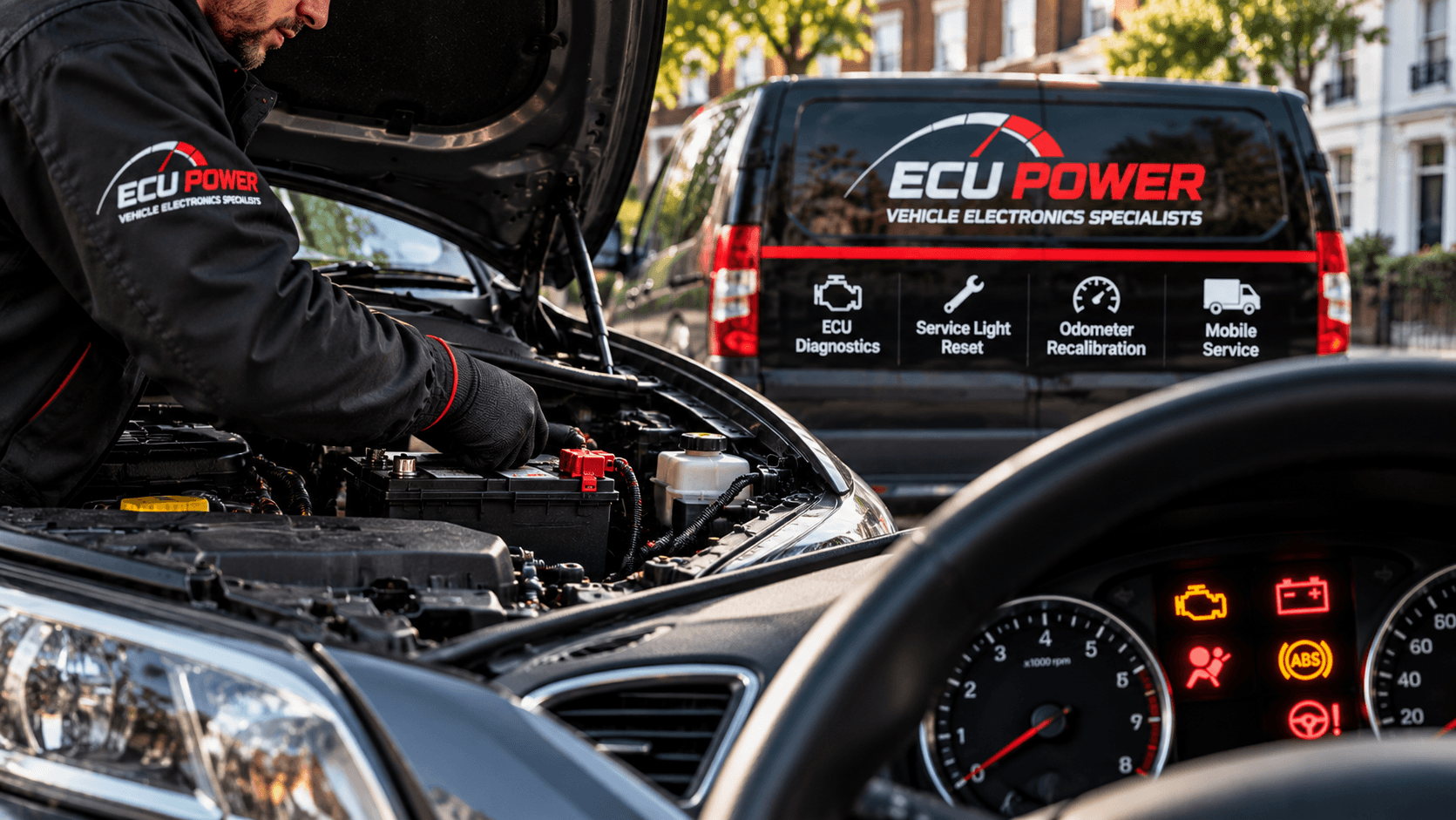
Replacing a car battery is a routine maintenance task, but some drivers notice unexpected dashboard warning lights after installing a new battery. These warnings may be related to voltage changes, electronic system settings, stored fault codes or an underlying vehicle problem.
In some cases, a warning may disappear after the vehicle completes a required initialisation procedure. In other situations, further investigation may be necessary to identify the cause.
ECU Power provides mobile vehicle electronic and diagnostic services across London and surrounding areas, helping drivers investigate vehicle faults using specialist diagnostic equipment.
Why Do Warning Lights Appear After a Battery Replacement?
Modern vehicles rely on electronic control units (ECUs) to manage engine performance, braking systems, steering assistance and other vehicle functions.
Disconnecting or replacing a battery interrupts the electrical supply. Depending on the vehicle, this can lead to temporary warning messages, lost settings or diagnostic codes.
Common reasons include:
- Temporary loss of electrical power
- Low or unstable battery voltage
- Loose or incorrectly connected battery terminals
- Charging system problems
- Electronic systems requiring recalibration
- Stored diagnostic fault codes
- Existing electrical or component faults
The cause depends on the vehicle’s make, model, age and electronic configuration.
Which Dashboard Warning Lights Can Appear After Battery Replacement?
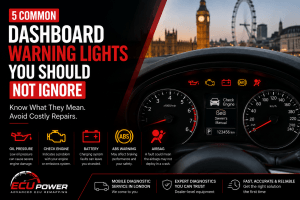
Several warning lights may appear after a battery change. Their meaning depends on the vehicle and the circumstances.
Engine Warning Light
The engine warning light may appear when the engine management system detects a fault or unexpected operating condition.
A diagnostic scan can retrieve relevant fault codes, but additional testing may be required to identify the underlying cause.
ABS Warning Light
The ABS warning light relates to the anti-lock braking system. It may indicate a sensor, wiring, electrical supply or braking system problem.
Because ABS is safety-related, do not assume a persistent warning will disappear on its own.
Steering Warning Light
Some vehicles use electronic power steering systems that may require initialisation or recalibration after certain power interruptions.
If the warning remains on or the steering feels unusually heavy, arrange an appropriate assessment before continuing to drive.
Airbag Warning Light
An airbag warning light can indicate a problem with the vehicle’s supplemental restraint system.
A battery replacement does not automatically mean that the airbag system needs resetting. A persistent warning should be investigated using suitable diagnostic equipment.
Battery or Charging System Warning Light
A battery-shaped warning light can indicate a charging system issue rather than a problem with the new battery itself.
Possible causes include alternator problems, poor electrical connections or charging voltage outside the expected range.
If the warning remains illuminated while the engine is running, seek professional advice promptly.
Can a New Battery Cause ECU Fault Codes?
Yes. A battery replacement can sometimes coincide with diagnostic fault codes, particularly when the vehicle experiences low voltage or an interruption to its electrical supply.
However, a fault code does not automatically mean the ECU has failed. The code may relate to a sensor, communication issue, electrical supply or another vehicle system.
A technician should interpret the code alongside the vehicle’s symptoms and available diagnostic information.
Can Low Battery Voltage Affect Vehicle Electronics?
Yes. Modern vehicles require a stable electrical supply for their electronic control units and other systems to operate correctly.
If battery voltage drops too low during starting or the electrical supply becomes unstable, the vehicle may record faults or display unexpected warnings.
A new battery does not automatically resolve every voltage-related issue. The battery specification, terminal connections, charging system and electrical condition may also need checking.
If several warning lights appear together, a diagnostic assessment can help determine whether they share a common cause.
Should You Reset the ECU After Replacing a Battery?
Not necessarily.
There is no universal rule that every vehicle needs an ECU reset after a battery replacement. Many vehicles restore normal operation without a special procedure, while others may require specific settings, relearning procedures or system initialisation.
Always follow the manufacturer’s recommended procedure for your vehicle.
Avoid disconnecting the battery repeatedly or clearing fault codes without understanding their cause. Doing so may remove useful diagnostic information or cause other settings to be lost.
If the warnings remain, a professional diagnostic check is a better starting point than an unnecessary reset.
What Should You Do If Warning Lights Stay On?
If dashboard warning lights remain after fitting a new battery, follow these steps:
- Check the vehicle handbook. Understand what each warning means and whether it indicates a safety-critical issue.
- Check the battery connections. If you’re unsure, have a qualified person inspect the terminals and connections.
- Consider the charging system. A new battery will not fix an alternator or charging circuit fault.
- Avoid repeatedly clearing warnings. Stored codes can provide useful information about the cause.
- Arrange diagnostic testing. If the warning persists, suitable diagnostic equipment can help identify the relevant fault.
If a warning concerns the brakes, steering, airbags or another safety-critical system, seek appropriate professional assistance rather than continuing to drive as normal.
How Can Professional Vehicle Diagnostics Help?
Professional vehicle diagnostics can help identify which electronic systems have reported a fault and what further checks may be required.
Depending on the vehicle, a diagnostic assessment may involve:
- Scanning relevant electronic control units
- Retrieving stored fault codes
- Checking available system information
- Investigating voltage-related or communication faults
- Identifying whether further testing is necessary
- Verifying the results after appropriate work
A diagnostic code is a starting point, not always a definitive answer. Additional testing may be needed before the cause can be confirmed.
You can explore the vehicle electronic and diagnostic services offered by ECU Power to learn more about the available support.
Is a Service Light the Same as a Fault Warning?
No. A service reminder usually relates to scheduled maintenance, whereas a fault warning can indicate a problem detected by a vehicle system.
If your car has been serviced but the maintenance reminder remains displayed, a service light reset may be appropriate once the required servicing has been completed.
However, resetting a service reminder will not repair an electrical fault or resolve an unrelated warning light.
Understanding the difference helps ensure that the correct procedure is carried out.
Can Electronic Module Problems Affect Mileage Information?
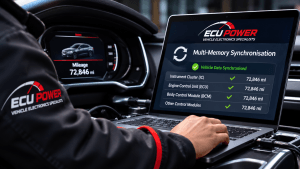
Some vehicles store mileage and related information across multiple electronic modules. Depending on the vehicle, an electronic fault or module replacement may result in inconsistent information that needs specialist assessment.
Where relevant modules contain inconsistent mileage information, ECU Power’s multi-memory synchronisation service may be appropriate.
This service is intended for applicable module-related discrepancies, not as a general solution to every warning light following a battery replacement.
Mobile Vehicle Diagnostics in London
When warning lights appear after a battery replacement, visiting a workshop may not always be convenient.
ECU Power provides mobile vehicle electronic and diagnostic services across London and surrounding areas. Suitable diagnostic work can be carried out at your home or workplace, depending on the vehicle and fault conditions.
Customers in Hayes, West London, North London and East London can contact ECU Power to discuss their vehicle’s symptoms and confirm service availability.
Our approach focuses on investigating the relevant electronic systems rather than simply clearing warning messages without understanding their cause.
Frequently Asked Questions
Is it normal for warning lights to appear after a battery replacement?
Some vehicles may temporarily display warnings after a power interruption. Persistent or safety-related warnings should be investigated rather than assumed to be normal.
Will driving the car make the warning lights disappear?
Some warnings may clear after a required relearning or initialisation procedure. Others indicate genuine faults. Follow the manufacturer’s guidance and do not drive normally if a safety-critical warning is present.
Does a new battery need to be registered with the car?
Some modern vehicles require battery registration or configuration after replacement, particularly those fitted with battery management systems. Requirements vary by vehicle.
Can disconnecting the battery clear an engine warning light?
Disconnecting the battery is not a reliable diagnostic solution. It may clear some stored information on certain vehicles, but it can also remove useful data or cause settings to be lost. Investigate the cause first.
Can ECU Power check warning lights at my home?
ECU Power offers mobile vehicle diagnostic services across London and surrounding areas. Contact the team to discuss your warning lights and confirm whether the vehicle can be assessed at your location.
Need Help With Warning Lights After a Battery Replacement?
If your dashboard warning lights appeared after a battery change and have not cleared, the safest approach is to identify the cause before attempting a reset.
ECU Power provides mobile vehicle electronic and diagnostic services across London and surrounding areas, helping drivers investigate faults using specialist equipment.
Contact ECU Power today to discuss your vehicle’s warning lights and arrange a suitable diagnostic assessment.