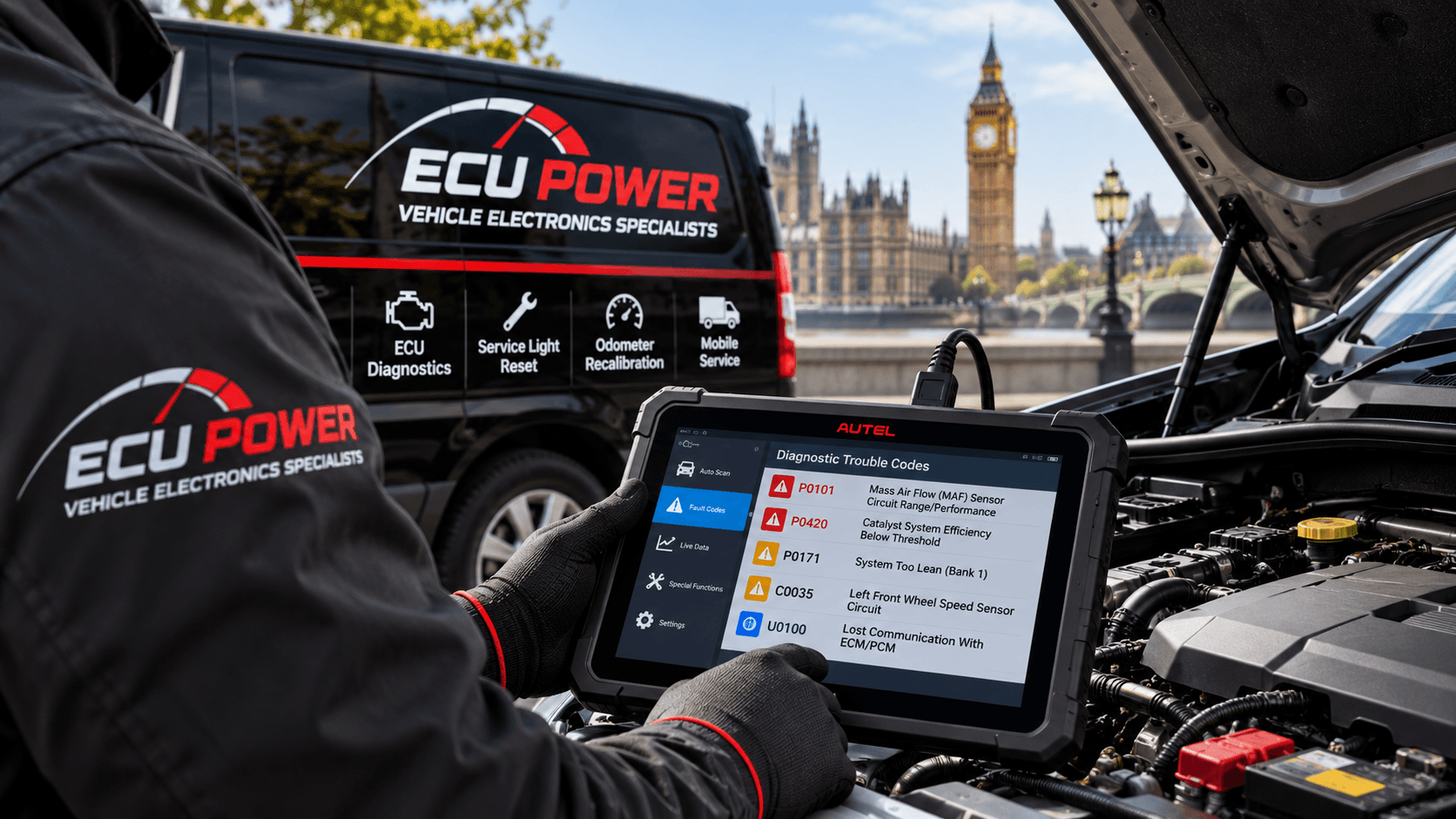
Modern vehicles use electronic control units (ECUs) to monitor engine performance, emissions, safety systems and other vehicle functions. When a system detects an issue, it may store a diagnostic trouble code, commonly known as an ECU fault code.
Understanding these codes can help drivers identify why a dashboard warning light has appeared and determine whether further investigation is needed.
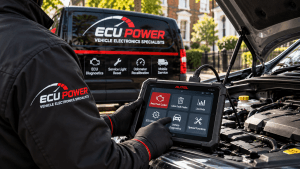
ECU Power provides professional mobile vehicle diagnostics across London and surrounding areas, helping customers investigate electronic faults using specialist diagnostic equipment.
In this guide, we’ll explain what ECU fault codes mean, why they appear, how they are diagnosed and when professional vehicle diagnostics may be needed.
What Is an ECU Fault Code?
An ECU fault code is a code stored by a vehicle’s electronic control system when it detects a condition that may require attention.
Modern cars contain multiple electronic control units, each responsible for monitoring or managing particular functions. Depending on the vehicle, these can include the engine, transmission, ABS, airbags, body electronics and instrument cluster.
When a monitored system detects an unexpected reading or communication problem, it may record a diagnostic trouble code (DTC).
A compatible diagnostic tool can retrieve these codes and provide information about the system involved. However, a fault code does not always identify the exact component that has failed.
For this reason, professional vehicle diagnostic services can help establish what further investigation may be required.
What Do the Letters and Numbers in ECU Fault Codes Mean?
Many standardised diagnostic trouble codes follow a combination of one letter and four digits. The first letter generally identifies the system associated with the code.
- P – Powertrain: Engine, transmission and related systems.
- B – Body: Certain body electronics and comfort systems.
- C – Chassis: Systems such as braking, steering and suspension.
- U – Network communication: Communication between electronic control modules.
The numbers that follow provide more specific information about the reported condition. The exact interpretation depends on the code, vehicle manufacturer and system involved.
Some manufacturers also use enhanced or manufacturer-specific codes that require compatible diagnostic equipment to interpret correctly.
What Causes ECU Fault Codes?
ECU fault codes can appear for several reasons. The code itself is only one piece of information, so the vehicle’s symptoms and operating conditions should also be considered.
Common causes include:
- Faulty or inaccurate sensor readings
- Damaged wiring or electrical connections
- Battery voltage problems
- Communication faults between electronic modules
- Engine management issues
- Emissions system problems
- Component wear or failure
- Incorrect configuration following certain repairs
- Intermittent electrical faults
A fault code does not automatically mean an expensive component needs replacing. Further checks may reveal a wiring issue, a poor connection or another underlying cause.
Can ECU Fault Codes Cause Dashboard Warning Lights?
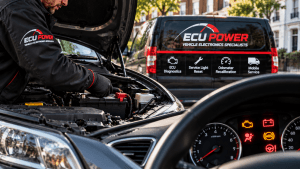
Yes. A fault detected by a vehicle’s electronic system may trigger a dashboard warning light or message.
The warning displayed depends on the system involved and the severity of the detected condition. For example, an engine management issue may trigger the engine warning light, while a problem in another system may produce a different warning.
Drivers should not assume that every dashboard light has the same cause.
If you notice an unfamiliar warning, consult your vehicle handbook and arrange appropriate checks. If the warning is red, flashing or accompanied by serious symptoms such as overheating, loss of braking performance or a sudden loss of power, stop safely and seek appropriate assistance.
For further guidance, read our guide to common dashboard warning lights.
How Are ECU Fault Codes Diagnosed?
A professional diagnostic assessment typically involves more than connecting a tool and reading a code.
1. Connect diagnostic equipment
A compatible diagnostic tool is connected to the vehicle’s diagnostic interface to communicate with the relevant electronic systems.
2. Scan the relevant control modules
The technician checks the accessible systems for stored diagnostic trouble codes and other available information.
3. Interpret the codes
The codes are considered alongside the vehicle’s symptoms, operating conditions and relevant technical information.
4. Investigate the underlying cause
Depending on the results, further checks may involve wiring, electrical connections, sensor readings or other components.
5. Carry out the appropriate action
Once the issue has been assessed, the next step may involve a repair, configuration, further testing or a suitable reset.
6. Verify the result
The relevant systems can be checked again to determine whether the original issue has been resolved.
The precise process varies by vehicle make, model, year and electronic system.
Does Clearing an ECU Fault Code Fix the Problem?
No. Clearing a diagnostic trouble code does not necessarily repair the fault that caused it.
If the underlying problem remains, the vehicle may detect it again and store the code once more. In some cases, clearing codes can also remove useful diagnostic information or reset certain readiness monitors.
The fault should therefore be investigated before deciding whether clearing the stored information is appropriate.
ECU Power provides diagnostic reset and repair services to help assess vehicle electronic issues and determine the appropriate next step.
Can Battery Problems Cause ECU Fault Codes?
Yes. Low battery voltage, a weak battery or an interruption to the electrical supply can sometimes contribute to fault codes or communication issues.
However, a voltage-related code does not automatically mean the battery itself is faulty. Charging system performance, electrical connections and other relevant components may also need to be checked.
If several unrelated warnings appear together, a proper assessment can help determine whether they share a common cause or represent separate problems.
What Is the Difference Between an ECU Fault Reset and a Service Light Reset?
These are two different procedures.
A fault-code reset concerns diagnostic information stored by the vehicle’s electronic systems. It should generally follow appropriate investigation of the underlying issue.
A service light reset updates a scheduled maintenance reminder after the required servicing has been completed.
For example, if your vehicle has had an oil change but the service reminder remains displayed, a service light reset may be appropriate.
If an engine warning light or another fault-related warning appears, the vehicle may need diagnostic testing rather than a routine service reset.
Can ECU Fault Codes Appear After a Module Replacement?
Yes. Depending on the vehicle, replacing an electronic control unit, instrument cluster or another module may require additional configuration, coding or synchronisation.
A replacement component may not communicate correctly until the relevant procedures have been completed. Other electronic modules may also store information that needs to be checked.
Where a legitimate mileage discrepancy occurs following an instrument cluster or ECU replacement, odometer recalibration may be relevant, depending on the vehicle and circumstances.
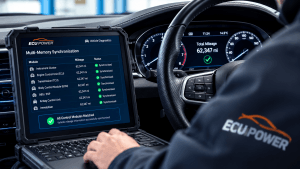
Some vehicles also store information across multiple electronic modules. ECU Power’s multi-memory synchronisation service may be relevant where applicable modules contain inconsistent information.
Mobile ECU Diagnostics in London
When a vehicle develops an electronic fault, arranging a workshop visit can be inconvenient. A mobile diagnostic service can provide a practical alternative when the vehicle and fault conditions are suitable for on-site assessment.
ECU Power offers mobile vehicle diagnostic services across London and surrounding areas, with appointments available at a customer’s home or workplace.
Customers in Hayes, West London, North London and East London can contact ECU Power to discuss their requirements and confirm service availability.
The diagnostic process helps establish which systems have reported faults and whether further investigation or an appropriate repair may be needed.
Why Choose ECU Power for Vehicle Diagnostics?
ECU Power specialises in mobile vehicle electronics and diagnostic services across London and surrounding areas.
The service focuses on using appropriate diagnostic equipment to access relevant vehicle systems, interpret available fault information and identify suitable next steps.
Services include:
- Vehicle diagnostic checks
- ECU fault assessment
- Diagnostic reset and repair
- Service light resets
- Odometer recalibration
- Multi-memory synchronisation
The correct procedure depends on the vehicle and the fault identified. Where further repairs or specialist work are needed, these requirements should be established before a reset is carried out.
Frequently Asked Questions
What is the most common ECU fault code?
There is no single ECU fault code that is most common across all vehicles. The codes recorded depend on the vehicle, its age, equipment and the problem detected.
Can I read ECU fault codes myself?
A compatible diagnostic scanner can read certain fault codes. However, interpreting the results correctly may require vehicle-specific information and further testing.
Will an ECU fault code disappear on its own?
Some intermittent faults may no longer be detected after the original condition disappears, but the stored code may remain. Other faults may continue to trigger warnings until the underlying issue is resolved.
Can ECU diagnostics identify electrical problems?
Diagnostic equipment can help identify stored faults and communication issues. Further electrical testing may be necessary to establish the precise cause.
Can ECU Power diagnose my vehicle at home?
ECU Power offers mobile diagnostic services across London and surrounding areas. Contact the team to confirm whether your vehicle and specific issue can be assessed at your chosen location.
Book Mobile ECU Diagnostics in London
ECU fault codes provide useful information about a vehicle’s electronic systems, but understanding the underlying cause is essential before deciding on a repair or reset.
If your vehicle has developed a dashboard warning, electrical issue or unexplained fault, ECU Power can help you arrange a suitable diagnostic assessment.
We provide mobile ECU diagnostics in London and surrounding areas, offering convenient support at your home or workplace.
Contact ECU Power today to discuss your vehicle’s diagnostic requirements.